


How american garment manufacturers for small brands work?
Most people who start a small fashion brand in the US walk into garment manufacturing with a very clean, almost cinematic idea of how it works.
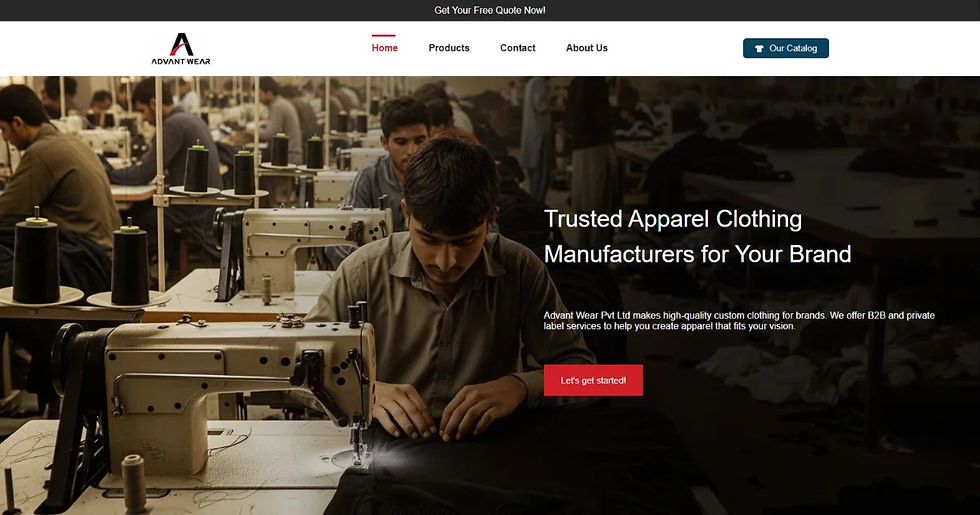
You design something, send it to american garment manufacturers, approve a sample, and a few weeks later you get boxes of finished product. That’s the expectation.
Then reality shows up.
In real life, small brands struggle because they don’t understand how American manufacturing actually operates on a day-to-day level.
They don’t realize factories are juggling multiple clients, dealing with labor constraints, chasing late fabric deliveries, and constantly adjusting schedules.
They don’t see the back-and-forth that happens during sampling, or how one tiny decision can delay production by weeks.
What I’ve seen over and over is this gap between expectation and reality with clothing manufacturers for startups. Small brands assume factories will guide them through everything.
Factories assume the brand already knows what they’re doing. And somewhere in the middle, things start to break down.
So instead of explaining this like a textbook, I’m going to walk you through how it really works. The good parts, the frustrating parts, and the parts nobody tells you until you’re already in the middle of production.
What American Garment Manufacturing Actually Means
When people say “made in the USA,” they often imagine a single factory doing everything under one roof. That’s rarely how it works, especially for small brands.
In reality, American garment manufacturing is more like a network of specialized operations. One place cuts fabric, another sews, another handles printing or embroidery, and sometimes finishing happens somewhere else entirely. Even when you work with a single factory, they are often outsourcing parts of the process behind the scenes.
In my experience, most US manufacturers are not full-service in the way beginners expect. They are production partners, not brand builders. They expect you to come in with a clear idea, proper documentation, and realistic expectations.
The biggest misunderstanding is thinking factories exist to help you figure things out. They don’t. They exist to produce garments efficiently. If you show up unprepared, they will still work with you if they see potential, but you will feel every gap in your knowledge during the process.
Types of Manufacturers in the USA
Not all manufacturers operate the same way, and choosing the wrong type is one of the fastest ways to waste time and money.
Cut and sew manufacturers are what most people think of when they imagine “real” manufacturing. You bring your own design, your own fabric choices, your own measurements. They build the garment from scratch. This is where you get full control, but also where things get complicated fast. You are responsible for getting everything right, from fabric sourcing to construction details.
Private label manufacturers sit somewhere in the middle. They already have existing styles or base patterns, and you customize them. You might change the fabric, adjust fit, add branding, or tweak small design elements. This is often a smarter starting point for small brands because you’re not building from zero.
Then you have blank suppliers. These companies produce basic garments like hoodies, t-shirts, and sweatpants at scale. You buy their products and add your branding through printing or embroidery. A lot of successful small brands actually start here, even if they don’t talk about it publicly.
What I’ve seen is that beginners often jump straight into cut and sew because it feels more “authentic.” But without experience, that route can become expensive and frustrating very quickly.
How the Process Actually Works Step by Step
On paper, the process looks simple. In reality, it’s a loop with constant revisions.
It starts with your idea, but an idea alone is useless to a factory. You need something they can actually work with. That usually means a tech pack or at least clear references. If your information is vague, the factory will either guess or keep asking questions, and both scenarios cost time.
Once the factory has enough information, they move into sampling. This is where most people get their first reality check. The first sample is almost never perfect. Sometimes it’s not even close. Fabric behaves differently than expected, measurements might be off, or construction details need adjustment.
You review the sample, give feedback, and they revise it. Then you repeat that process. Sometimes once, sometimes five times. It depends on how prepared you are and how complex the garment is.
After you approve a final sample, production planning begins. This involves ordering materials, scheduling labor, and fitting your order into the factory’s production calendar. This is where delays often start. Fabric might arrive late. Another client’s order might run over schedule. Machines might be tied up.
Once production starts, the cutting happens first. Fabric is laid out and cut into pieces based on your pattern. Then those pieces move to sewing, where they’re assembled into garments. After that comes finishing, which could include trimming threads, adding labels, pressing, and packaging.
Quality control is supposed to happen throughout the process, but the level of consistency varies depending on the factory. This is something small brands often underestimate.
Finally, the goods are packed and either shipped or picked up. That’s the clean version. The messy version includes small errors, minor delays, and last-minute adjustments that nobody really talks about upfront.
MOQ and Why It Matters in Real Life
MOQ stands for minimum order quantity, but most beginners misunderstand what it really represents.
Factories don’t set MOQs just to be difficult. They set them because every production run has a setup cost. Machines need to be prepared, patterns need to be organized, workers need to be assigned, and materials need to be handled.
If your order is too small, it’s simply not worth their time.
In real life, MOQ is not always a fixed number. It can change depending on the complexity of your garment, the type of fabric, and how busy the factory is. I’ve seen factories lower their MOQ for a simple t-shirt but require higher quantities for something like a structured jacket.
What small brands often don’t realize is that even if a factory agrees to a low MOQ, you might pay for it in other ways. Higher per-unit costs, longer lead times, or lower priority in the production schedule.
MOQ is basically the factory’s way of protecting their efficiency. If you understand that, you can negotiate more realistically.
Cost Reality of Manufacturing in the USA
This is where a lot of expectations fall apart.
Manufacturing in the US is expensive. Not slightly expensive, but significantly more expensive than overseas production. Labor costs are higher, compliance standards are stricter, and operating expenses are simply different.
What I’ve seen is that beginners often compare US pricing to overseas pricing and assume they’re being overcharged. They’re not. They’re just seeing the real cost of local production.
Another misunderstanding is thinking that higher cost automatically means higher quality. That’s not always true. You can still get inconsistent quality in the US if the factory is not well-managed or if your instructions are unclear.
Pricing also depends heavily on volume. Small runs cost more per unit because you’re not benefiting from scale. Fabric sourcing, cutting, and sewing all become more efficient at higher quantities.
There’s also the hidden cost of mistakes. If your sample process is messy or your communication is unclear, you might end up paying for multiple revisions or fixing production issues after the fact.
How Small Brands Actually Work With Manufacturers
This part is less about theory and more about day-to-day interaction.
Communication is constant. Emails, calls, messages, sometimes in-person visits if you’re local. You’re not just placing an order and waiting. You’re checking in, clarifying details, and making decisions throughout the process.
In my experience, the brands that do well are the ones that stay involved without becoming a burden. There’s a balance. If you disappear, things go wrong. If you micromanage every step, you slow everything down.
Sampling is where relationships are built. This is where the factory sees how you work. Are you clear with your feedback? Do you understand what you’re asking for? Are your expectations realistic?
I’ve seen small brands lose good manufacturing partners simply because they were difficult to work with during sampling.
Another thing people don’t expect is that factories prioritize clients differently. If you’re a small brand with low volume, you are not their top priority. That doesn’t mean they don’t care about your order, but it does mean you need to be patient and organized.
Common Problems Small Brands Face
The most common issue I see is unclear communication. A brand sends vague instructions, the factory makes assumptions, and the final product doesn’t match expectations. Then both sides get frustrated.
Another big problem is unrealistic timelines. Small brands often underestimate how long sampling and production take. They plan launches based on ideal timelines, not real ones.
Fabric sourcing is another pain point. Sometimes the fabric you want is not available in small quantities. Sometimes it’s discontinued halfway through your process. Sometimes it behaves differently than expected.
Fit issues are also extremely common. A garment might look perfect on paper but fit completely differently in real life. Fixing fit can take multiple sample rounds, and each round costs time and money.
Then there are production errors. Wrong labels, stitching inconsistencies, measurement deviations. These things happen even in good factories. The difference is how they’re handled.
How to Find Reliable Manufacturers
Most people expect there to be a clean directory of trustworthy manufacturers. That’s not really how it works.
In reality, people find factories through a mix of referrals, industry connections, trade shows, and a lot of trial and error. Online directories exist, but they only tell you so much.
What actually matters is how a factory communicates with you early on. Are they responsive? Do they ask the right questions? Do they seem organized?
Visiting the factory, if possible, tells you more than any website ever will. You can see how they operate, how clean the space is, how workers are managed, and how organized their process is.
Another thing I’ve learned is that reliability often comes from consistency, not perfection. A good factory might still have issues, but they handle them professionally and keep you informed.
Pros and Cons of Manufacturing in the USA
There are real advantages to manufacturing locally. Communication is easier, especially if you’re in the same time zone. You can visit the factory, build relationships, and solve problems faster.
Lead times can be shorter, especially for reorders. You also have more control over quality if you stay involved in the process.
There’s also the branding aspect. “Made in USA” carries value for certain customers, especially in premium or ethically focused markets.
But the downsides are just as real.
Costs are higher, which limits your margins unless you price your product accordingly. Capacity is also more limited compared to overseas factories. You might struggle to scale quickly.
There’s also less specialization in some areas. Certain fabrics or techniques are simply easier to find overseas.
Conclusion
If you step back and look at how American garment manufacturing actually works, the biggest shift is mental, not technical. It’s understanding that this is not a service where you hand over an idea and receive a finished product. It’s a collaboration where both sides are trying to make something work within real constraints. Time, labor, material availability, machine capacity, and cost all play a role, and none of them are perfectly predictable.
In my experience, most of the frustration small brands feel comes from expecting a smooth, linear process. That almost never happens. Sampling takes longer than expected. Costs come back higher than planned. A fabric you liked suddenly becomes unavailable. A sample that looked great in photos fits completely differently in person. These are not rare problems. They are normal parts of the process. Once you accept that, you stop treating every issue like a failure and start treating it like part of the workflow.
FAQs
What American garment manufacturing actually means for small brands?
American garment manufacturing for small brands is basically a system where production is done locally but in a very segmented and capacity-driven way. It is not usually one big factory doing everything from start to finish. Instead, it often involves multiple specialized steps like cutting, sewing, printing, and finishing being handled either in-house or through trusted partners. For small brands, this means you are entering an ecosystem that is built for efficiency and consistency, not experimentation or hand-holding.
What most people misunderstand is that US factories are not structured like creative studios. They are production environments. If you come prepared with clear designs, tech packs, and realistic expectations, things move smoothly. If you don’t, the system quickly exposes those gaps. So in practice, it is less about “ordering clothes” and more about managing a production process alongside experienced manufacturers.
Why do small brands struggle so much with US manufacturers?
Small brands struggle mainly because they underestimate how structured and strict the production process is. They often enter with inspiration-driven ideas but without the technical clarity needed to translate those ideas into manufacturing instructions. That gap shows up immediately during sampling, where even small missing details can lead to multiple revisions and delays.
Another major issue is expectation mismatch. Many small brands expect fast turnaround, low quantities, and high customization all at once. In reality, factories have capacity limits, scheduling constraints, and cost structures that do not bend easily. When these expectations are not aligned early, frustration builds on both sides, even if the factory is actually doing its job correctly.
What is the biggest mistake small brands make when working with factories?
The biggest mistake is starting the conversation too early without being ready. Many brands approach factories with only a rough idea, expecting the manufacturer to fill in the technical gaps. In reality, factories are not set up to develop your product from scratch unless you are paying specifically for development services, which can be expensive and time-consuming.
What I’ve seen in real production environments is that unclear communication creates a chain reaction. A vague instruction leads to an incorrect sample, which leads to revisions, which then pushes back production timelines. The brand then feels the factory is slow, when in reality the issue started at the very beginning with incomplete input.
How long does the manufacturing process actually take in the USA?
The timeline depends heavily on how complex your product is and how prepared you are before sampling begins. For a simple garment, the full process from first sample to production can take several weeks, but more commonly it stretches into months when revisions are involved. Sampling alone can take multiple rounds, especially if fit or fabric behavior needs adjustment.
Production itself also depends on factory scheduling. Even after approval, your order has to be slotted into an existing production calendar. If the factory is busy, your order waits its turn. On top of that, fabric sourcing and external services like printing or embroidery can add additional delays that are often outside the factory’s direct control.
Is manufacturing in the USA worth it for small fashion brands?
It depends entirely on your brand goals and budget structure. If you value shorter communication loops, easier quality control, and local production credibility, then US manufacturing can be a strong fit. It also allows you to stay closer to the process, which helps a lot in early-stage brand development when learning is important.
However, if your primary focus is maximizing margins or producing large volumes at low cost, then the US can feel restrictive. The pricing is higher, and scaling quickly can be challenging. In practice, many successful small brands use a hybrid approach, starting locally to refine their product and later expanding production strategies once they understand their market better.


Comments